
Sell, Donate or Move It? A Decision Helper for Your Stuff
On this page
Sell it, donate it or move it?
Pick the kind of item, answer one question about it, and get a recommendation. For interstate movers, weight is part of what you pay, which is why heavy items deserve a second look.
What kind of item are you deciding about?
Large furniture
Do you want this piece in the new home, and will it fit the space?
Measure the new rooms, doorways and stairs if you can.
Yes, I want it and it fits
Keep an eye on it
Move it, and plan for its weight
Solid furniture you want and that fits is usually worth moving. It is also heavy. If you hire an interstate mover on a non-binding estimate, 49 CFR 375.401(b)(2) says the final charges are based on the actual weight of the shipment, and 375.507 requires the mover to weigh it before charges are assessed. A binding estimate is different: 375.401(b)(1) says it guarantees the total cost based on the quantities and services shown on the estimate, so list the piece.
What to do
- Measure the piece, the doorways and the stairs at both ends, and note whether it comes apart.
- Tell every company that quotes you about the piece so it appears on the estimate or inventory.
- Pad it, protect the corners and keep the screws and brackets taped to the underside in a labeled bag.
I like it, but I do not know if it will fit
Deal with it soon
Measure before you decide, and set a deadline
An unmeasured piece is the one people regret in either direction. If you hire an interstate mover on a non-binding estimate, 49 CFR 375.401(b)(2) says the final charges are based on the actual weight of the shipment, and 375.507 requires the mover to weigh it before charges are assessed. Before you pay to move it, make sure it has a place.
What to do
- Get the floor plan or measurements of the new rooms, and tape out the piece's footprint on the floor.
- Set a date, tied to when you book transport, after which an undecided piece gets sold or donated.
- If you sell, take clear photographs and list it early, because large items can take time to find a buyer.
It is worn, or I would not miss it
Deal with it soon
Sell or donate it
A worn piece you would not miss is mostly weight. If you hire an interstate mover on a non-binding estimate, 49 CFR 375.401(b)(2) says the final charges are based on the actual weight of the shipment, and 375.507 requires the mover to weigh it before charges are assessed. Heavy items you do not need add to that weight without adding value to the new home.
What to do
- List it for sale if it is in decent shape, or ask local charities whether they accept furniture and collect it.
- Pick a date for pickup well before moving day so it does not end up in the truck by default.
- Offer it to friends or neighbors first if you want it to go quickly.
Appliances
Will the new place already have these appliances?
Yes, they come with the home
Deal with it soon
Sell, donate or leave them
If the new home already has appliances, yours become extra weight. If you hire an interstate mover on a non-binding estimate, 49 CFR 375.401(b)(2) says the final charges are based on the actual weight of the shipment, and 375.507 requires the mover to weigh it before charges are assessed. For a home you are selling or renting out, check your sale contract or lease for what stays.
What to do
- Confirm in writing which appliances stay at the old home and which come with the new one.
- Sell or donate the ones that are yours, and book any pickup early.
- Disconnect and drain them properly if they are leaving, following the manufacturer's instructions.
No, and mine are in good working order
Keep an eye on it
Move them, but ask the right questions first
Appliances in good working order are worth keeping if you need them, but they are among the heaviest things you own. If you hire an interstate mover on a non-binding estimate, 49 CFR 375.401(b)(2) says the final charges are based on the actual weight of the shipment, and 375.507 requires the mover to weigh it before charges are assessed.
What to do
- Ask each company whether it disconnects and reconnects appliances, and get the answer in writing.
- Prepare them as the manual directs, for example by emptying and cleaning, and secure doors and cords.
- Make sure they appear on the estimate or inventory.
No, but mine are old or unreliable
Deal with it soon
Let them go and plan to replace them
Old or unreliable appliances are the worst of both worlds: heavy to move and likely to need replacing. If you hire an interstate mover on a non-binding estimate, 49 CFR 375.401(b)(2) says the final charges are based on the actual weight of the shipment, and 375.507 requires the mover to weigh it before charges are assessed.
What to do
- Sell or donate working ones, and ask your local waste service or retailer how to dispose of those that do not work.
- Check delivery times for new appliances so you are not without them on arrival.
Books
Which describes most of your books?
I read or use them regularly
Keep an eye on it
Move the ones you use, in small boxes
Books are dense: a small box can be surprisingly heavy, and if you hire an interstate mover on a non-binding estimate, 49 CFR 375.401(b)(2) says the final charges are based on the actual weight of the shipment, and 375.507 requires the mover to weigh it before charges are assessed.
What to do
- Use small boxes for books so they are liftable, and fill each one to the top so it does not collapse.
- Keep an essentials shelf you will read in the first weeks, packed last.
I keep them out of habit
Deal with it soon
Sell or donate most of them
Books you keep out of habit are heavy cargo for little benefit. If you hire an interstate mover on a non-binding estimate, 49 CFR 375.401(b)(2) says the final charges are based on the actual weight of the shipment, and 375.507 requires the mover to weigh it before charges are assessed.
What to do
- Pull out the ones you would miss and let the rest go to a used bookstore, library sale or donation bin.
- Do it by shelf instead of by book so the decision goes quickly.
A mix, and the boxes are many
Deal with it soon
Trim the shelves, then pack the rest
Many boxes of books add real weight. If you hire an interstate mover on a non-binding estimate, 49 CFR 375.401(b)(2) says the final charges are based on the actual weight of the shipment, and 375.507 requires the mover to weigh it before charges are assessed.
What to do
- Go shelf by shelf and set aside everything you have not opened in years.
- Pack what remains in small boxes, and donate the rest before packing day.
Sentimental items
How would you describe the item?
Small enough to carry in my own car
Keep an eye on it
Carry it yourself
Small sentimental items are best kept with you, not packed on a truck. Nobody else knows their worth to you, and a mover's liability depends on how the shipment is valued, not on what the item means to you.
What to do
- Pack photos, documents and keepsakes in a box that rides in your own car.
- Take photographs of the items before you pack them.
Large, fragile or valuable
Deal with it soon
Move it, but protect it on paper
Large, fragile or valuable sentimental items travel best with careful handling and clear records. On an interstate move, 49 CFR 375.201 describes the mover's liability for loss and damage, and 375.203 says that liability may be limited for an article worth more than 100 dollars per pound unless you tell the mover about it in writing.
What to do
- Photograph the piece from several angles before packing, and keep the photographs.
- If you hire an interstate mover, ask about valuation and list any especially valuable article in writing.
- Consider carrying the most irreplaceable items yourself.
I cannot decide yet
Keep an eye on it
Set it aside and decide later
Undecided sentimental items rarely benefit from a rushed choice. A holding box lets you move without forcing a decision under deadline pressure.
What to do
- Put the item in a labeled holding box and photograph it.
- Pick a date after the move to review the box, and be willing to let go of some of it then.
Cheap flat-pack furniture
How does the flat-pack piece hold up?
It is still sturdy and comes apart cleanly
Keep an eye on it
Move it, with the hardware
Sturdy flat-pack that comes apart cleanly can travel well. If you hire an interstate mover on a non-binding estimate, 49 CFR 375.401(b)(2) says the final charges are based on the actual weight of the shipment, and 375.507 requires the mover to weigh it before charges are assessed.
What to do
- Take it apart carefully, and tape every screw, cam and bracket in a labeled bag to the largest panel.
- Wrap the panels flat, edges protected, and mark each piece to match.
It wobbles, or has already been moved before
Deal with it soon
Sell or donate it
Flat-pack that wobbles, or has been through a move before, often does not survive another. If you hire an interstate mover on a non-binding estimate, 49 CFR 375.401(b)(2) says the final charges are based on the actual weight of the shipment, and 375.507 requires the mover to weigh it before charges are assessed.
What to do
- Offer it free or for little to a neighbor, or donate it if a charity accepts it.
- Take what is useful, such as shelves or drawer hardware, if you will reuse them.
It is easy to replace and I am moving far
Keep an eye on it
Replace it at the other end
When a piece is easy to replace and the move is long, the weight is the main cost of keeping it. If you hire an interstate mover on a non-binding estimate, 49 CFR 375.401(b)(2) says the final charges are based on the actual weight of the shipment, and 375.507 requires the mover to weigh it before charges are assessed.
What to do
- Sell or donate it before the move, and note the model so you can buy a similar one near the new home.
- Wait to buy furniture until you have seen the rooms.
In short: Pick an item type, answer one question, and get a verdict. If you hire an interstate mover on a non-binding estimate, final charges follow the shipment's actual weight, so heavy, replaceable items are the best candidates to sell or donate.
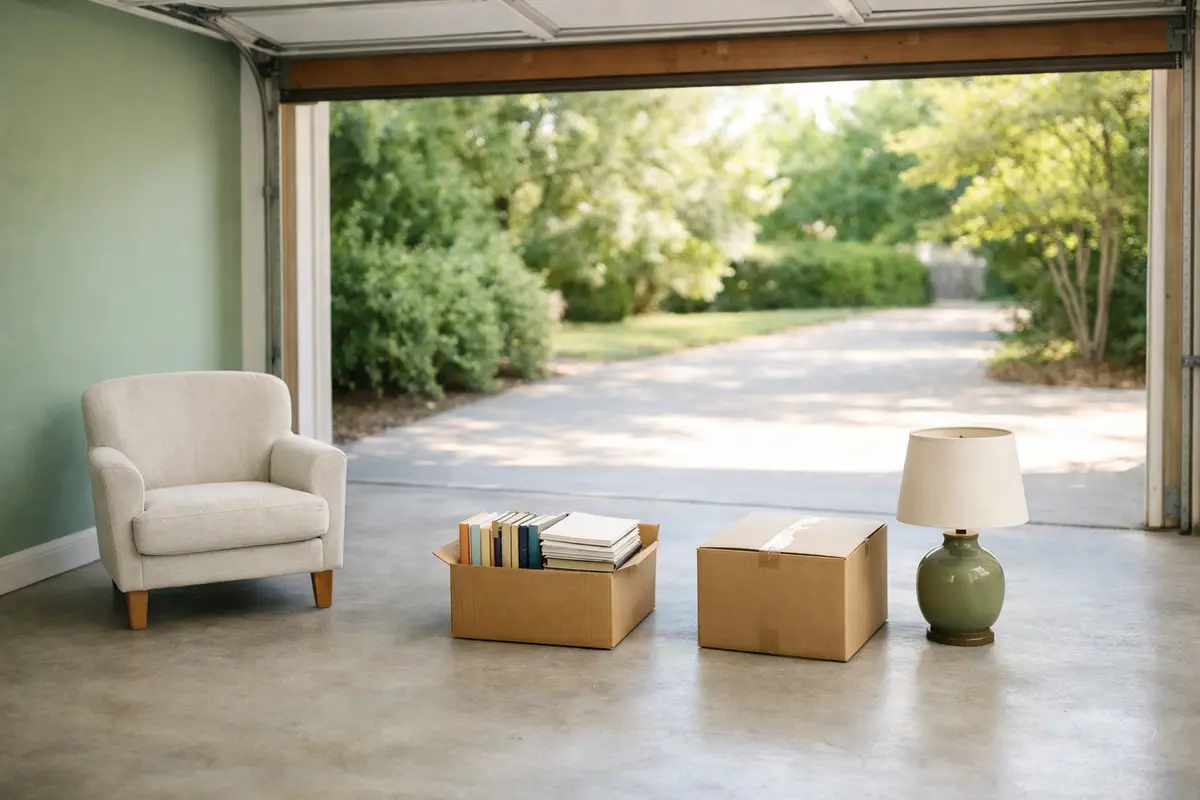
Anyone packing up a home hits the same wall: the closets are full, the moving date is fixed and every object seems to need a decision. This helper is for that stage. Choose the kind of thing in front of you, answer one question about it, and it tells you whether to move it, sell it or donate it, with a few next steps that fit.
Why weight is the thread running through it
Whatever you own has two costs: what it takes to replace it, and what it takes to carry it. For an interstate move with a hired mover, the second one is not abstract. Under 49 CFR 375.401(b)(2), a non-binding estimate is the mover's belief about the total cost, and the final charges are based on the actual weight of the shipment and the mover's tariff. Section 375.507 requires the mover to determine the weight of such a shipment on a certified scale before charges are assessed, and 375.513 gives you the right to observe each weighing. So every heavy thing you take can raise the final bill. A binding estimate works differently: under 375.401(b)(1) it guarantees the total cost for the quantities and services shown on the estimate, which is why the list of what you are moving matters either way.
That rule applies to household-goods movers on interstate moves. If you move yourself, weight shows up in other ways: the truck's load limit, your back and the number of helpers you need. Part 375 does not cover a move within a single state, so ask a local mover how it prices the job.
How to read your result
The categories differ in what drives the decision.
- Large furniture turns on fit and affection. A piece you love that fits the new space is worth moving. One you are unsure about needs a measurement and a deadline.
- Appliances turn on what the new home provides and the condition of yours. Old ones are heavy and may need replacing soon anyway.
- Books turn on how often you use them. They are dense, and boxes add up quickly.
- Sentimental items are not really a weight question. They are about protecting what cannot be replaced.
- Cheap flat-pack is often the best candidate to sell or donate, because it tends to be easy to replace and does not always survive a second assembly.
Worked example
Priya is moving to another state and has an oak bookcase, three hundred paperbacks, a fifteen-year-old refrigerator, a set of laminate shelves and a box of her grandmother's letters. She runs each through the helper. The bookcase fits the new living room, so it is a move, with the dimensions noted. The paperbacks land on trimming: she keeps the ones she rereads and donates the rest by the shelf. The refrigerator is old and the new apartment has one, so it goes. The laminate shelves wobble, so they go too. The letters go into a box that rides in her own car. The mover's estimate is non-binding, so she knows the weight she removes matters to the final charges.
When to call someone
If you hire an interstate mover, ask for the written estimate and read how it treats weight. The companion guide on binding and non-binding estimates explains the difference. For items worth more than they weigh, such as jewelry or heirlooms, ask the mover about valuation before the move. This page is general information, not legal advice. For help with a dispute, contact your state consumer office or a lawyer.
Related pages: binding vs. non-binding moving estimates, movers vs. truck vs. container and the moving timeline checklist.
Questions people ask
Can I sell things after I move?
You can, but it usually costs more effort. Items you carry to the new place take up space there, while selling before the move is easier when buyers can see and collect them.
Do I have to sell what I do not take?
No. Donating is often quicker. Ask the charity what it accepts and whether it collects, and book early.
Does the weight rule apply if I rent a truck?
No. The weight rule is part of 49 CFR Part 375 for movers on interstate moves. A rental has its own load limits, which the rental company publishes.
Sources
- eCFR, 49 CFR Part 375 ecfr.gov