
Movers vs. Rental Truck vs. Moving Container: Which to Choose
On this page
Movers, a rental truck or a moving container?
Three questions about how much of the work you want to do and where you are moving. The result explains what protections come with each option.
Who should do the packing, loading and driving?
Pick the closest fit. You can change your mind after reading a result.
Someone else: I want a crew to load and drive
Does the move cross a state line?
Federal household-goods rules apply to interstate moves. A move inside one state is outside them.
Yes, to another state
Deal with it soon
Hire a household-goods mover, and use your federal rights
For an interstate move, 49 CFR 375.101 says a household goods motor carrier must follow Part 375 when it serves an individual shipper. In practice that gives you a written estimate marked binding or non-binding (375.401), the rights booklet and the Ready to Move brochure before you sign (375.213 and FMCSA), and a stated level of liability for loss and damage (375.201). FMCSA says you can search its Registered Mover Database for the company.
What to do
- Search FMCSA's Registered Mover Database for each company before you accept an estimate, and ask for the rights booklet and brochure in writing.
- Get a written estimate that says whether it is binding or non-binding. Under a non-binding estimate, 375.401 says the final charges are based on the actual weight of your shipment and the tariff.
- Ask which valuation level the quote includes. Part 375 describes full value protection and the written waiver that leads to released rates; read the difference before you choose.
- Know the claims path before you sign: the FMCSA booklet reproduced in Part 375 gives nine months from delivery to file a claim in writing.
No, within one state
Deal with it soon
Hire a mover, but check your state's rules
Part 375 covers interstate household-goods moves (375.101), so a move inside one state is outside it. Any rules for local movers come from your state, and this page does not describe them. The habits still carry over: a written estimate, a clear idea of who is liable for damage, and a plan for what to do if something is broken.
What to do
- Ask your state's consumer protection office whether any state rules or licensing apply to local movers there.
- Request a written estimate that lists the services included, and read the contract before signing anything with blanks in it.
- Ask in writing how the company handles damage claims and what limits apply to its liability.
I am not sure how my route is classed
Deal with it soon
Ask the company which rules apply to your route
Part 375 applies to household goods carriers moving goods in interstate commerce for individual shippers (375.101). If you cannot tell whether your route counts, do not guess. The company should be able to say which rules govern your move and give you the documents that go with it.
What to do
- Ask each company in writing whether your move is interstate and which rules apply, and keep the answer.
- Search FMCSA's Registered Mover Database for the company name either way, since FMCSA offers the search for interstate household goods moves.
- Treat the estimate as a legal document: confirm it says whether it is binding or non-binding.
I will pack and load, but I do not want to drive
Keep an eye on it
A moving container fits what you described
With a container, you pack and load your belongings and the company moves it. That sits between hiring a crew and driving a truck yourself. The definitions in 375.103 exclude a carrier moving containers that you load and unload entirely yourself from the meaning of household goods motor carrier, so the Part 375 mover paperwork does not come with it. This site does not describe particular companies or their terms, so check what each one promises in writing.
What to do
- Ask what happens if something is damaged and what the written terms say about liability, in the contract rather than the sales pitch.
- Confirm that the container can be placed at both addresses, and whether your building or street needs permission.
- Plan the loading: heavy items low, furniture padded, boxes filling gaps so nothing shifts.
I will do it all myself, including the driving
Are you comfortable driving a large box truck and lifting heavy furniture?
Yes, and I have helpers lined up
Keep an eye on it
Rent a truck and move yourself
You load, you drive and you carry the risk of damage. Because you are not hiring a household-goods mover, the Part 375 mover protections (written estimate, rights booklet, valuation levels and the mover claims process) do not apply to your move. Your protections come from the rental agreement and from your own preparation.
What to do
- Pick a size from the rental companies' own published specifications, and lean larger if the move is one-way.
- Read the rental agreement and ask the rental company what it covers and what it does not, before you pick it up.
- Photograph valuable items before loading, pad and strap furniture, and label boxes by room.
- Line up helpers for both ends, since loading and unloading are the hardest parts.
I would be nervous driving it
Deal with it soon
A rental truck may be a poor fit, so compare the other two
Driving a large truck and moving heavy pieces without help is where many do-it-yourself moves go wrong. If either worry fits you, weigh a moving container, where you pack and load and the company moves it, or a mover, where the crew does the heavy part and Part 375 applies if you cross state lines.
What to do
- Decide which heavy pieces are the problem, such as a sofa, appliances or a bed, and ask whether selling them would solve it.
- Get at least two written quotes for a crew and compare them with your plan to rent a truck.
- Read what a container company expects you to load and where it can be placed at both ends before you commit.
I have no helpers for the heavy pieces
Deal with it soon
A rental truck may be a poor fit, so compare the other two
Driving a large truck and moving heavy pieces without help is where many do-it-yourself moves go wrong. If either worry fits you, weigh a moving container, where you pack and load and the company moves it, or a mover, where the crew does the heavy part and Part 375 applies if you cross state lines.
What to do
- Decide which heavy pieces are the problem, such as a sofa, appliances or a bed, and ask whether selling them would solve it.
- Get at least two written quotes for a crew and compare them with your plan to rent a truck.
- Read what a container company expects you to load and where it can be placed at both ends before you commit.
I am not sure; I want to know what protections I get
Keep an eye on it
Start with the protections a mover must give you
The clearest difference is paperwork. For an interstate move, a mover has to give you a written estimate, the rights booklet and a stated liability level, and Part 375 sets out a claims process with deadlines. A rental truck, or a container you load and unload yourself, falls outside those mover rules, so the contract terms are what protect you.
What to do
- Read FMCSA's Protect Your Move page, which links the rights booklet and Ready to Move brochure, then decide how much of that protection you want.
- Make a short list of what you cannot afford to lose or break, and ask each option who is responsible for those items.
- Come back to the first question once you know how much of the work you can do yourself.
In short: Hiring a household-goods mover for an interstate move brings written estimates, a rights booklet, stated liability and a claims process under 49 CFR Part 375. Renting a truck means you load and drive, and those mover protections do not apply.
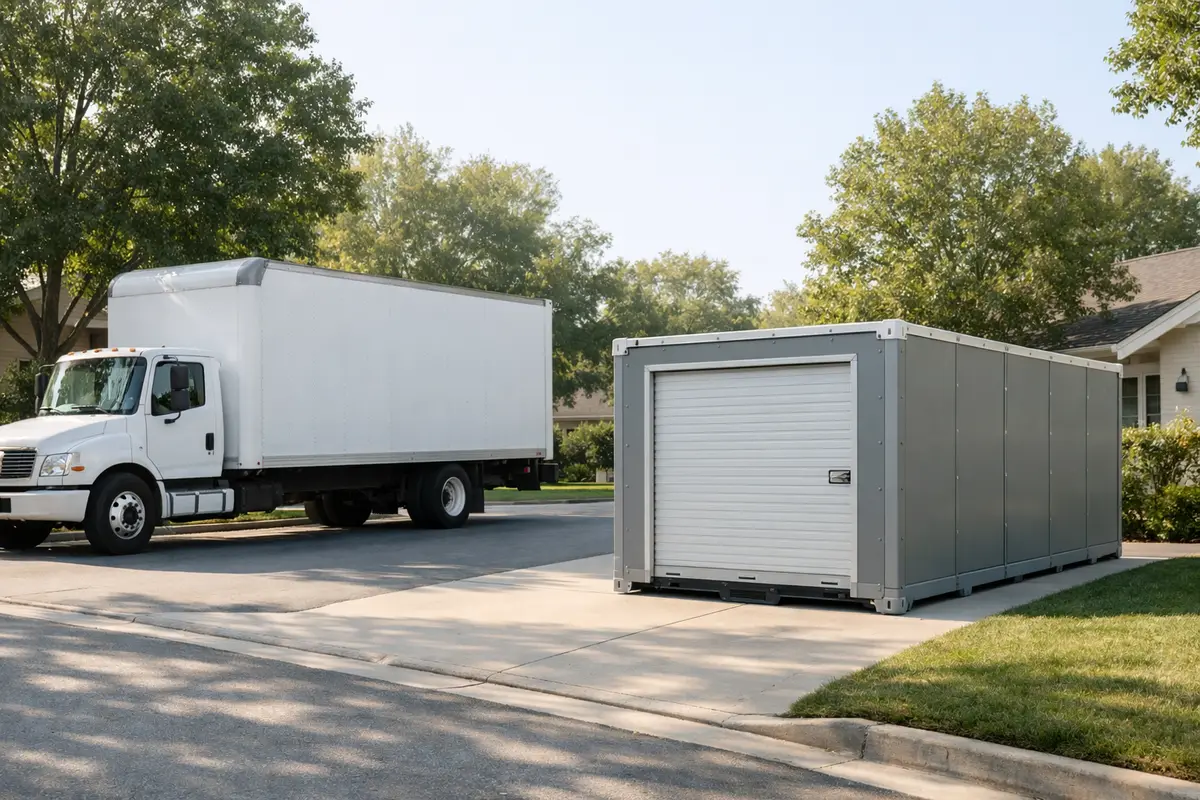
This helper is for anyone choosing how to physically get their belongings from one home to another and unsure whether to hire a crew, rent a truck or have a container delivered. It focuses on one question that price comparisons skip: what protection do you actually have if something goes wrong? The answer differs sharply between the three, and it starts with a set of federal rules that only one of them triggers.
What Part 375 gives you with a mover
The federal household-goods rules are in 49 CFR Part 375. Section 375.101 says they apply to a household goods motor carrier moving goods for individual shippers in interstate commerce. That is the key limit. A move that stays inside one state is outside Part 375. Whether your state has its own rules for local movers is a question for its consumer protection office, and this site does not try to summarize them.
For an interstate move, the rules give you several things you can ask for by name. Section 375.401 requires a written estimate that says whether it is binding or non-binding, and explains that under a non-binding estimate the final charges are based on the actual weight of the shipment. Section 375.213 and FMCSA's Protect Your Move page say you should receive the booklet Your Rights and Responsibilities When You Move and the Ready to Move brochure. Section 375.201 describes the mover's liability for loss and damage, including full value protection and the written waiver that leads to a lower, released level. And the rights booklet in Part 375 says a claim must be filed in writing within nine months of delivery, that the mover has 30 days to acknowledge it, and that it then has 120 days to give you a disposition.
What you do not get from a rental truck
When you rent a truck and drive it, you are not hiring a household-goods mover. No carrier is moving your goods for you, so none of the Part 375 mover protections apply. There is no mover estimate to compare, no federal rights booklet handed to you, no valuation election and no mover claims process. What you have is the rental agreement and the precautions you take yourself. That is not a reason to avoid renting: for many short moves it is the sensible choice. It is a reason to read the agreement, ask what the rental company covers and take photographs of anything valuable.
Where containers fit
A moving container sits between the two. You pack and load it, and the company moves it. That split matters legally. The definitions in 49 CFR 375.103 say a household goods motor carrier does not include a carrier that moves containers or trailers loaded and unloaded entirely by you. So a container you fill yourself does not come with the Part 375 mover paperwork, and the contract is where your protection lives. This site makes no claims about particular companies or their terms. Read the contract for what it says about damage and liability, confirm the container can be placed at both addresses, and keep the same paper trail you would for any move.
Worked example
Maya is moving two states away and assumes a rental truck is the only way to keep control of the schedule. The helper asks who should do the loading and driving, and she says she would rather not drive. That sends her to the container result. Her sister, in the same situation but wanting a crew to do everything, answers the first question differently, then says the move crosses a state line, and lands on the mover result. The difference between the two outcomes is mostly what each can ask of the company: Maya reads her contract closely, while her sister can request a written estimate marked binding or non-binding, the rights booklet and the valuation options, and can search FMCSA's Registered Mover Database for the company first.
When to talk to someone else
If a mover ever refuses to give you your goods or changes terms at delivery, FMCSA says it cannot resolve claims against a moving company, but its page explains how to file a complaint. For a damage dispute with any company, keep every document and photo. A lawyer or your state consumer office can tell you what applies to your situation. This page is general information, not legal advice.
Next steps depend on your result. The vet a mover checklist walks through checking a company, and what size moving truck do I need helps if you are renting. Shrinking the load with sell, donate or move it helps with any option.
Questions people ask
Does Part 375 apply if I rent a truck from a rental company?
No. Part 375 governs household goods motor carriers transporting goods for individual shippers. When you rent and drive the truck yourself, you are not hiring such a carrier.
Can I use FMCSA's tools for a move inside one state?
FMCSA's Protect Your Move page is aimed at interstate household goods moves. For a local move, ask your state's consumer-protection office which rules and complaint routes apply.
Do I need to decide before I get quotes?
No. Get a written estimate from at least two companies and compare it with your plan to move yourself. The comparison often shows which option is realistic.
Sources
- eCFR, 49 CFR Part 375 ecfr.gov
- FMCSA, Protect Your Move fmcsa.dot.gov