
Printable Moving Checklist by Room and Area of Life
On this page
Printable moving checklist by room and area of life
Use the print button in your browser to print or save this as a PDF. Each box is something to finish, and the groups are by place, not by date.
0 of 29 done
Paperwork and people
USPS says to allow at least 7 to 10 business days after approval, and that you must tell senders yourself.
Source: FMCSA, Protect Your Move
Kitchen and dining room
Bedrooms and bathrooms
A leak in a box can spoil everything beside it.
Living room, office and electronics
Garage, yard and things not to pack
Ask your mover for its list of items it will not carry. Do not guess.
The booklet in Appendix A to Part 375 says federal law forbids it.
Source: eCFR, 49 CFR Part 375
Old home and new home
Sources (3)
- FMCSA, Protect Your Move fmcsa.dot.gov
- eCFR, 49 CFR Part 375 ecfr.gov
- USPS, Standard Forward Mail and Change of Address usps.com
In short: One list you can print and tape to the fridge, organized by place instead of by date: paperwork, kitchen, bedrooms, living spaces, garage, and the two homes. Use it beside a timeline so the job gets done room by room.
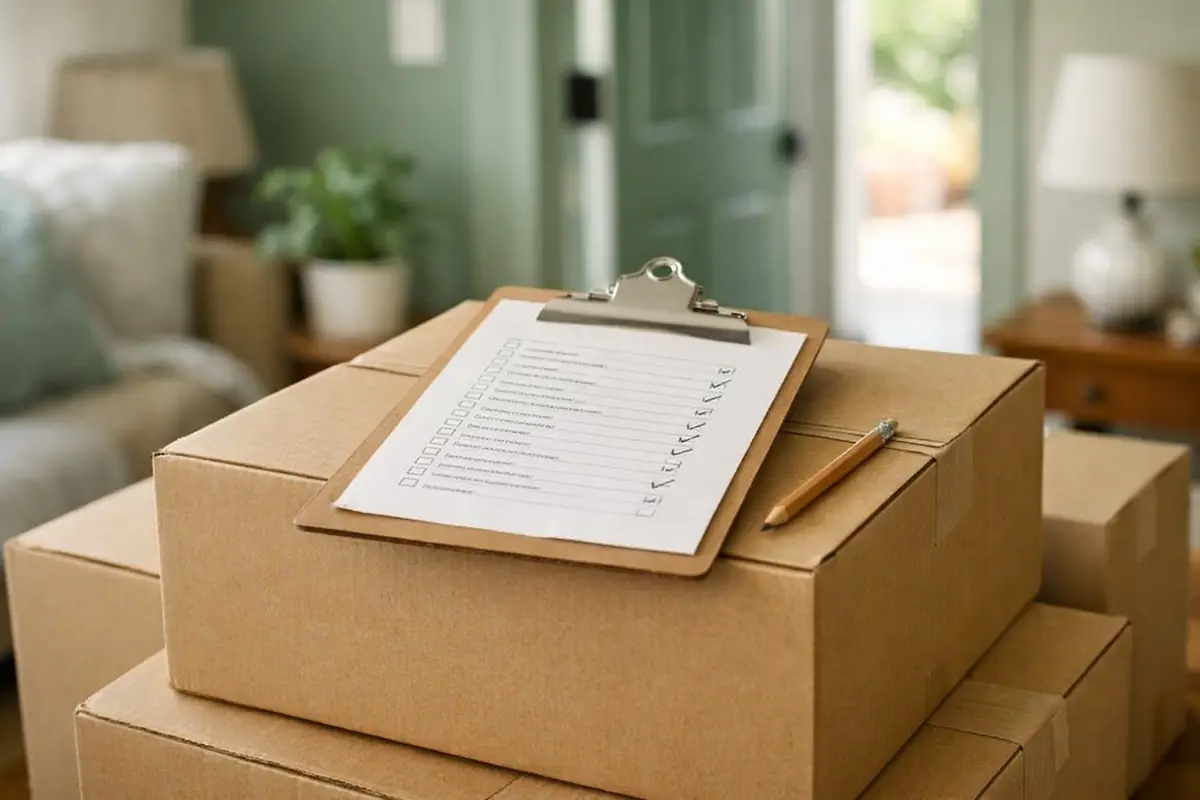
This is the checklist to print. It is for the person who prefers a paper sheet by the door to a screen, and who thinks about a move in terms of rooms: what is in the kitchen, what is in the garage, what is left to do about the mail. It has one list, with no dates, so you can use it with any timeline and tick things off as you pass each room.
How to print it
Use your browser's print command, or choose "Save as PDF" in the print dialog if you want a copy for your phone. Each section is a place, and each item is one small task. Print before you start, because the tick boxes are the point: a box you can see from across the room is a reminder, and a screen in a drawer is not.
If you want the dates as well, the moving timeline checklist is arranged by week and covers booking and paperwork in the order they fall due. This page is deliberately different: it assumes you know the date and want to see everything in one place.
What the groups are for
The first group, paperwork and people, is the one people forget because it has no boxes to pack. It covers your mail forwarding request, the offices and accounts that need your new address, and the folder you carry yourself. USPS says that a change of address order only changes your address with the Post Office and that you must tell senders, including government agencies and financial institutions, yourself. It also says some sensitive mail is not forwarded.
The room groups follow, kitchen first because it is the longest to pack and the easiest to get wrong. After the rooms comes a group for the garage and yard, which is also where the items you must not box live. The federal rights booklet in Part 375 tells you not to send hazardous materials in your boxes or luggage unless the mover knows. Ask your mover for its own list, since each company's differs.
The final group covers the two homes, so the keys, utilities, photos and safety checks are not left to the last minute.
Worked example: a three-bedroom house
Take a house with a kitchen, three bedrooms, two bathrooms, a living room with a television, a home office and a two-car garage. You print the sheet and tape it by the front door. On the first weekend you tackle the garage group, because it has the longest decisions: what to throw away, what the mover will not carry, and what you can sell. That reduces both the packing and what you have to describe in an estimate.
During the following weeks you take one room per evening, ticking its group as you finish and writing the box numbers in your notebook. The kitchen takes two evenings. The paperwork group cannot wait for the end: the mail request goes in at least two weeks out, because USPS needs 7 to 10 business days after approval, and the rest of that group follows over the next few evenings. On the last night you work through the old-home items in the final group. By the time the crew arrives, only the walk-through boxes are unchecked.
What changes the list
An apartment has no garage or yard, so you can ignore that group and keep the dangerous-items reminder. A home with a child's room, a nursery or a workshop will have extra items of its own, and you should add them. If you are moving a long distance with a mover, the paperwork group grows: add the estimate, the bill of lading and the inventory to your folder, and see the moving day checklist for how those are handled.
When to ask for help
If you are moving a piano, a safe, a pool table or something else that needs special handling, ask the mover about it before the day, since an item the company was not told about can be a problem. If you are unsure whether something is hazardous, ask the mover rather than guessing.
Questions people ask
Why is there no date on each item?
Because the same job can take two weeks or two months. Pair this page with a timeline if you want dates.
Can I add my own items?
Yes. Write them in the margin once printed. The browser version saves ticks only for the items listed.
Sources
- FMCSA, Protect Your Move fmcsa.dot.gov
- eCFR, 49 CFR Part 375 ecfr.gov
- USPS, Standard Forward Mail and Change of Address usps.com