
Apartment Move-Out Checklist: Cleaning, Photos and Keys
On this page
Apartment move-out checklist
From notice to key return: what to do so the move-out goes smoothly and your deposit has the best chance of coming back. Ticks are saved in this browser only.
0 of 20 done
Before you start
Deposit rules and notice periods differ by state and by lease. This list does not state them.
Your lease is the first place to look for what you owe, and for the deadline to give notice.
These rules vary, so check your state's official consumer or attorney general website or ask a local tenant organization.
They show what was already there.
Clean and repair
Check the lease first, because some leases say to leave repairs to the landlord.
Document the condition
These images are your record of how you left the place.
Walk-through, keys and deposit
Seeing the list of concerns while you are present gives you a chance to respond.
Mail forwarding is not a safe plan for financial documents: USPS says senders may not allow them to be forwarded.
Sources (1)
In short: Give written notice, clean, photograph every room with dates, attend the walk-through, return all keys with a receipt, and give your forwarding address in writing.
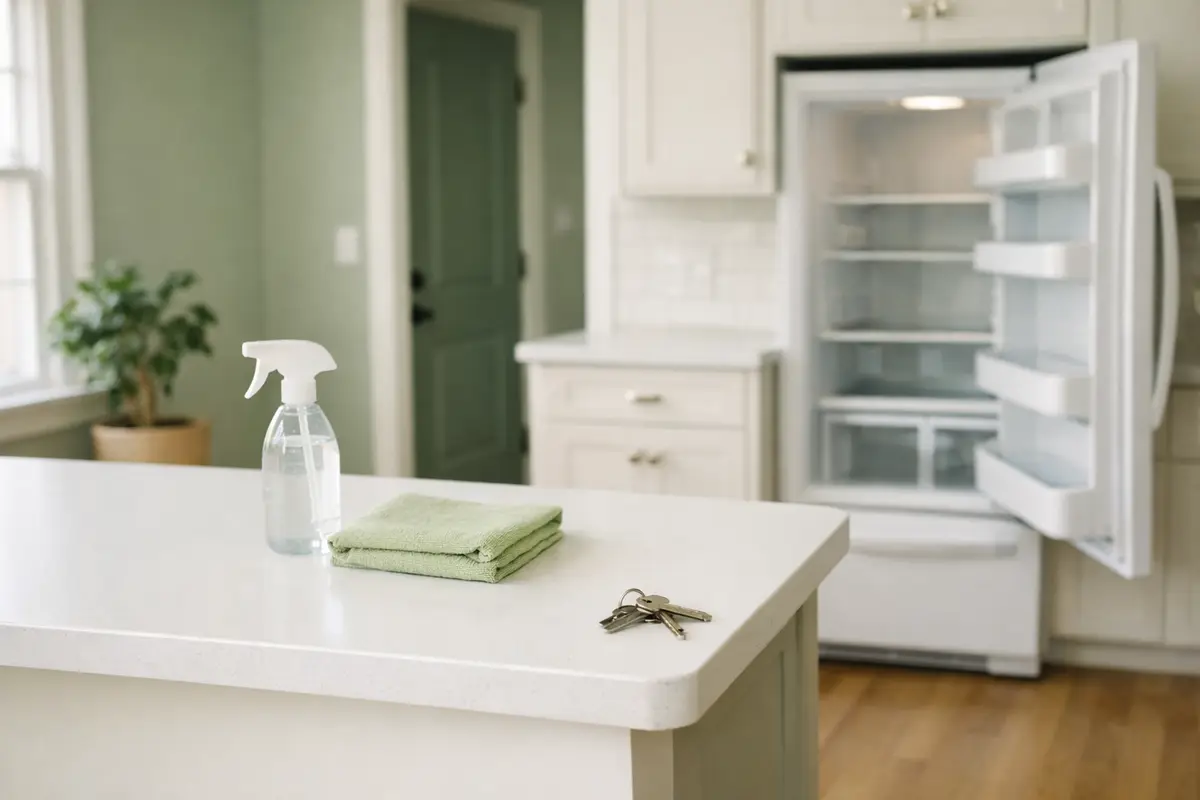
This checklist is for renters who are leaving an apartment and want to leave it in a condition they can prove. It runs from the notice you give, through cleaning and photographing, to the walk-through, the keys and the address where your deposit should be sent. It is not legal advice, and it does not state any state's deposit rules. Those differ, and your lease sets many of the details.
How to use it
Read the lease first. It tells you the notice period, how it must be delivered, what cleaning is expected and where keys go. Everything else on the list works around those terms. Then look up your state's rules on security deposits through an official source, such as your state's consumer protection or attorney general website, or ask a local tenant organization. Rules about when a deposit must be returned and what a landlord must itemize vary a lot, so do not rely on what a friend in another state tells you.
Give your notice in writing and keep proof of when you sent it. A dated email or a copy of a letter will do if the lease allows it, and the lease will say.
What changes the result
The biggest factor is evidence. Photos and video taken after you clean are your record of how you left the place, and move-in photos show what was already there. Take them room by room, with close-ups of existing marks. The walk-through is the second factor. Being there lets you hear the landlord's concerns and answer them, and asking for any checklist in writing gives you something to refer back to.
The third is the forwarding address. The landlord needs somewhere to send your deposit or a statement. Give it in writing. Do not let mail forwarding carry that job alone. USPS says some senders, financial institutions among them, do not allow sensitive documents to be forwarded, and a landlord with only your old address has nowhere else to write. Set up USPS forwarding anyway, as the change of address checklist explains, but treat it as a safety net rather than the plan.
Worked example: a one-bedroom on the thirtieth
Suppose your lease ends on the thirtieth. A month earlier you reread it and send your notice by the method it names. Two weeks before, you find your move-in report and photos. On the twenty-eighth, you empty the apartment and clean the oven, fridge, bathroom and floors, then photograph every room with the date shown and back the photos up. On the twenty-ninth, you meet the landlord for the walk-through, ask for any concerns in writing, and take a copy. You hand over all keys and the fob and get a receipt, then give your new address on a sheet of paper. In your calendar, you add a reminder to follow up if you have not heard about the deposit by the date your state's rules and lease suggest.
When to ask for help
If you and the landlord disagree about charges, start with a polite written request for an itemized explanation. If that does not resolve it, a local tenant organization, legal aid office or an attorney can explain your options. The moving timeline checklist can help you plan the other deadlines around your lease end.
Questions people ask
Do I need to repaint or patch holes?
It depends on your lease. Read what it says about wear and tear and about repairs, and ask the landlord if you are unsure.
What if the landlord will not do a walk-through?
Ask in writing, and if they decline, take your own dated photos and keep a note that you asked.